
MJS Roofing services
Leadwork & Pointing in Surrey and North Hampshire
Most roof leaks don't start in the middle of a tile. They start at the joins: where the roof meets a wall, a chimney or another roof. Those spots are sealed with lead. The ridge tiles along the top are held down with mortar. When either one fails, water gets in.
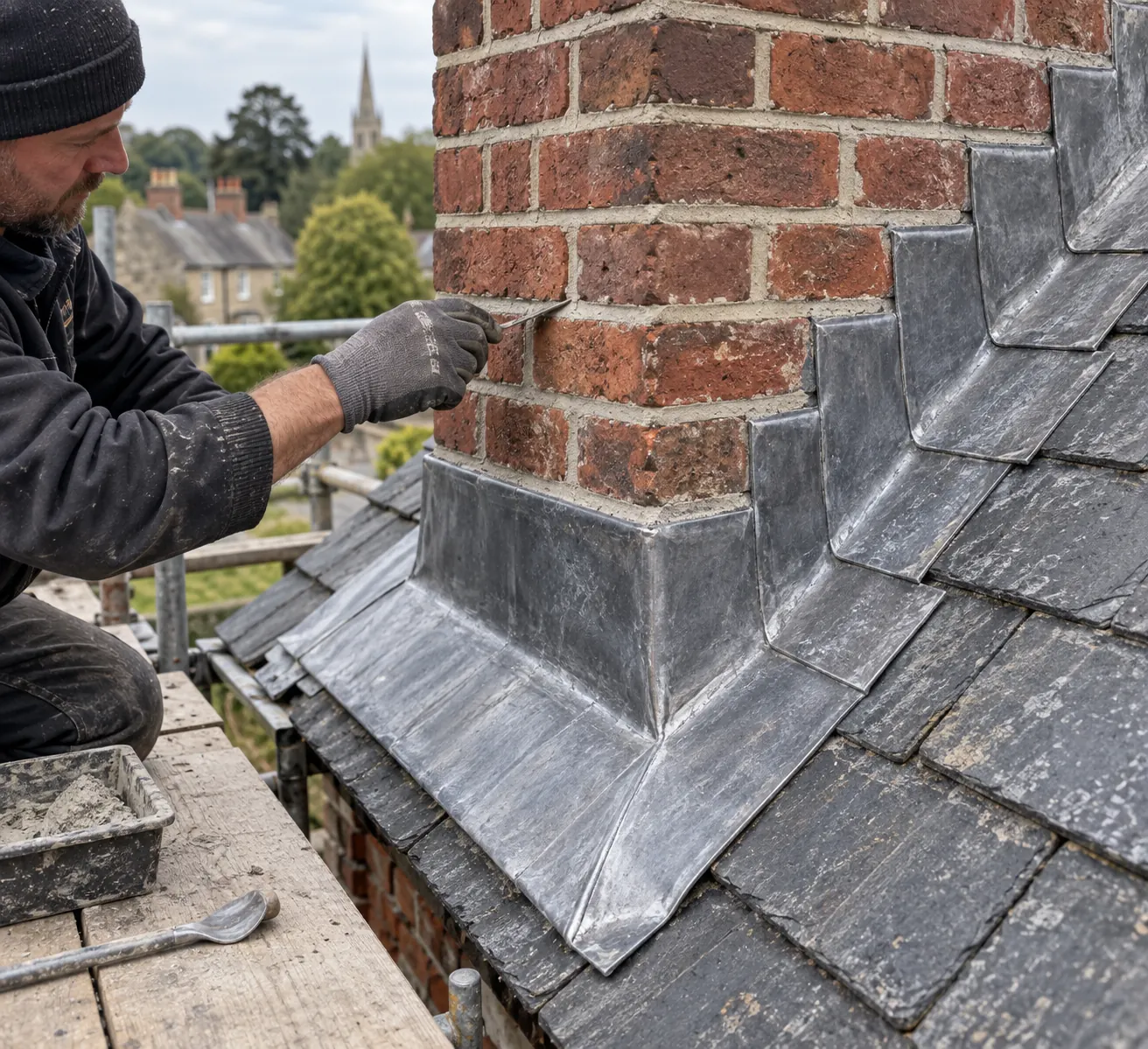

MJS Roofing does leadwork and roof pointing across Surrey and North Hampshire. It's detailed work, and getting it right the first time is what keeps your roof watertight. Found a leak at a join? Call 01252 308591 or send a message for a free quote.
Leadwork
Lead is the classic material for making tricky roof joins watertight. It bends to shape, it's tough and it can last for decades. But it has to be fitted properly. Lead that's too thin, badly fixed or bent the wrong way will split.
- Flashings where the roof meets a wall or chimney
- Valleys, where two roof slopes meet
- Chimney trays and back gutters
- Dormer cheeks and roofs
- Bay window and porch roofs
- Small lead flat roofs
Lead comes in different thicknesses, called codes. We use the right code for the job, because a valley needs heavier lead than a small flashing. If lead has been stolen or torn off in a storm, we can replace it — let your insurer know as well.
Signs your leadwork has failed
- Damp patches on walls or ceilings where the roof meets a wall or chimney
- Splits, cracks or holes in the lead
- Lead that has lifted, curled or is hanging loose
- Gaps between the lead and the wall
- Old cement or mortar fillets that have cracked or fallen out
That last one is common. Cement fillets crack over time, and lead is a much better long-term fix.
Roof pointing
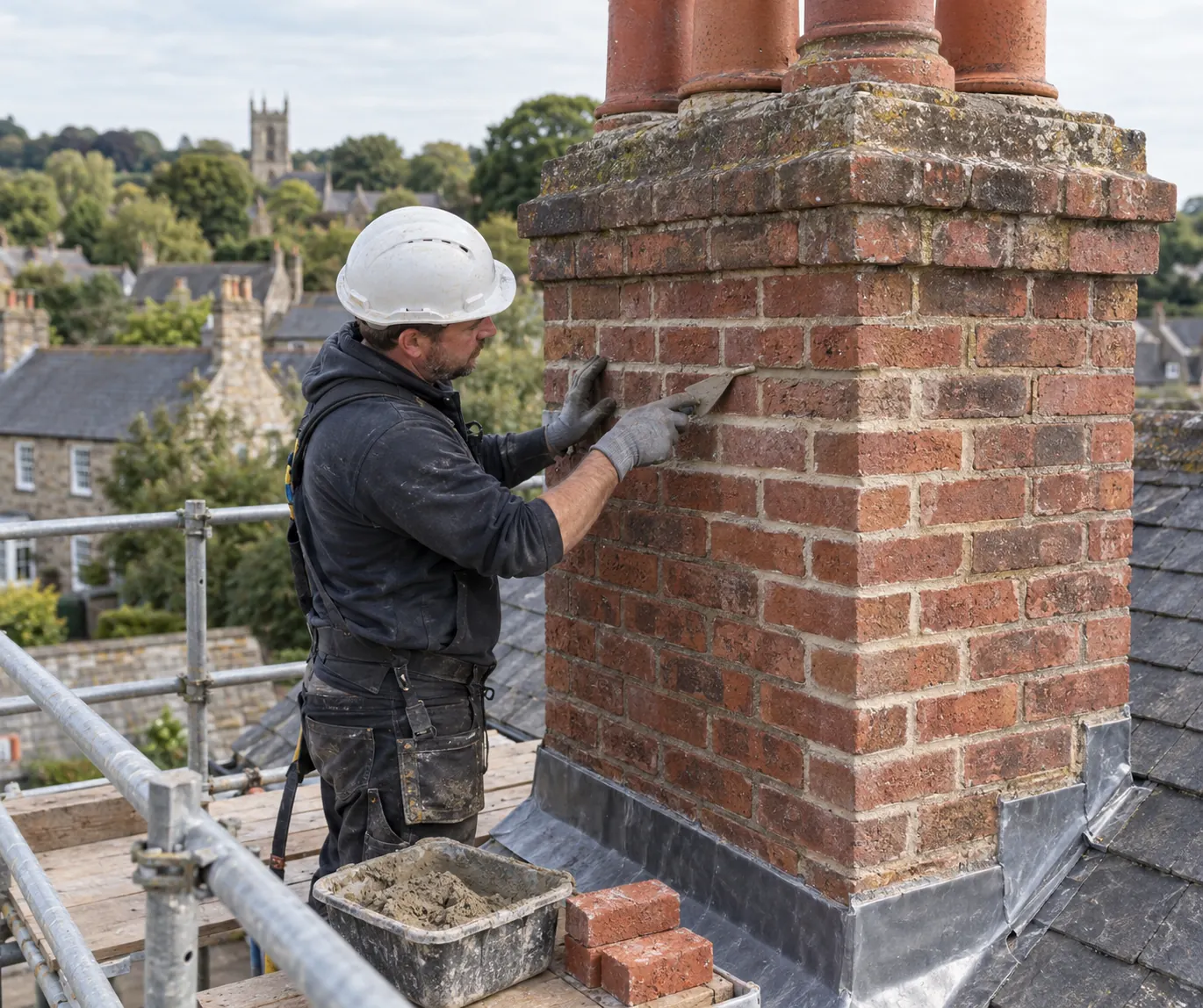
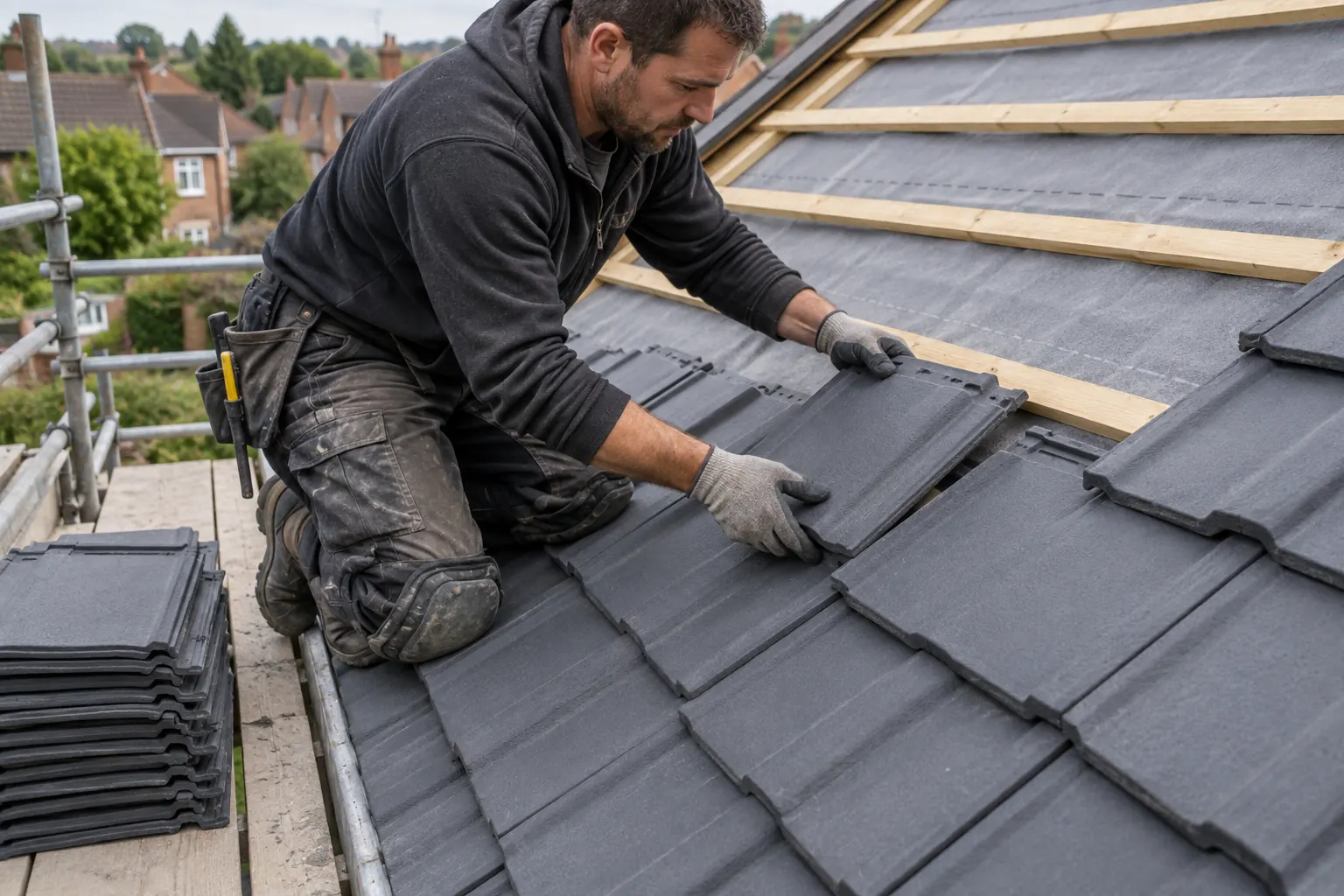
Pointing on a roof means the mortar that holds ridge tiles, hip tiles and verge tiles in place. Up there it takes a lot of weather. When it cracks or falls out, tiles come loose and wind and rain get underneath. We rebed loose ridge and hip tiles on fresh mortar and repoint the joints. It's a routine repair that stops bigger problems. If your ridge tiles look uneven, or you find bits of mortar in the gutters, it's time to have them looked at. We can also fit dry ridge and dry verge systems. These hold tiles with fixings instead of mortar, so there's less to crack. We'll tell you whether it's a good fit for your roof.
Why small jobs matter
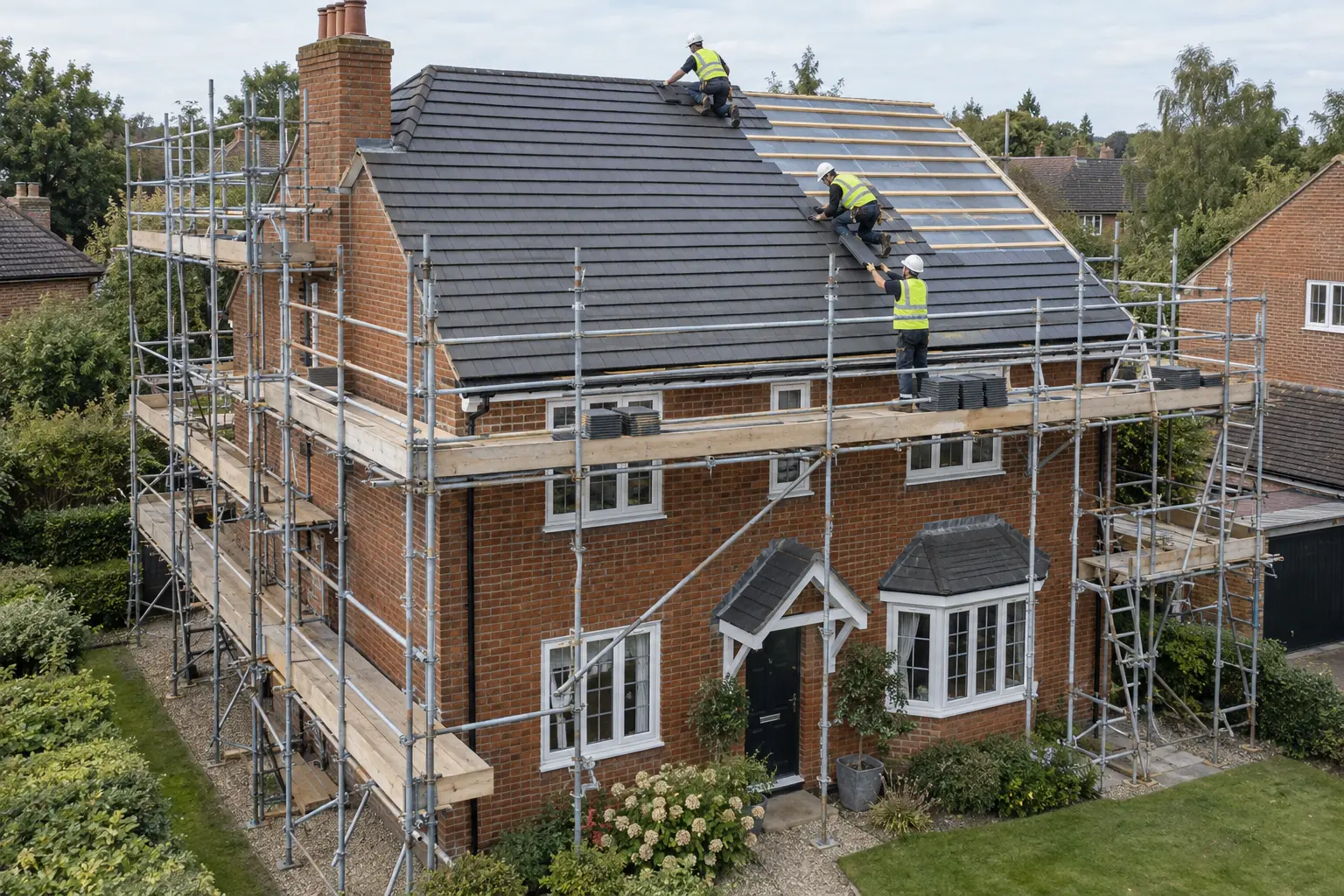
Leadwork and pointing repairs are small jobs compared with a new roof. Ignore them, though, and water gets into the roof timbers and the walls. The costs go up fast. Fixing them early is usually the cheapest choice you'll make.
Common questions
Leadwork & Pointing questions
How long does lead last?
Well-fitted lead can last for decades. It fails early if it's too thin, badly fixed or has moved a lot. We use the right thickness for the job.
Can you use something other than lead?
Sometimes. Sealants and self-adhesive flashing tapes are used for quick fixes, but they don't last as long as lead. For many roofs, lead is still the best choice. We'll explain the options for yours.
How often should ridge tiles be repointed?
There's no set rule. It depends on the roof and the weather it takes. Have them checked if you see cracks, gaps or loose tiles, and after any big storm.
Is a small crack in the mortar a problem?
It can be. Cracks let water in, and frost makes them wider. Fixing it early is quick and cheap.
You may also need
Related roofing services
Tell us about your roof
Request a quote
Describe what you have noticed and we’ll contact you to discuss the next step.