
MJS Roofing services
Flat Roofing in Surrey and North Hampshire
Flat roofs are useful. They cover extensions, garages, porches, dormers and outbuildings. They are also often the first part of a house to leak. Rain sits on a flat roof for longer than it does on a pitched one, so a small fault can turn into a big one quickly.
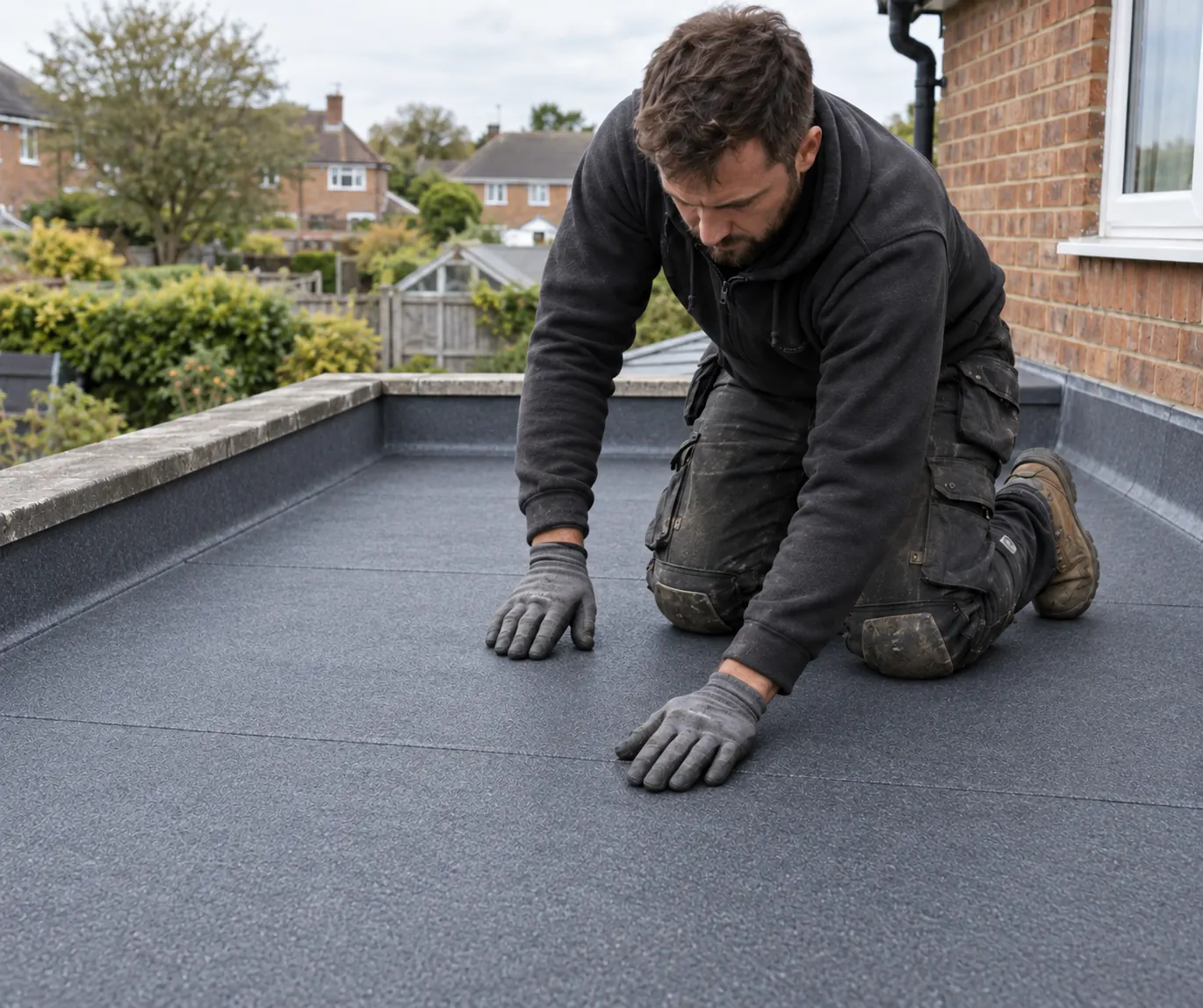
MJS Roofing repairs and replaces flat roofs across Surrey and North Hampshire. We find out why yours is leaking, tell you plainly what it needs and fix it properly. If a repair will do the job, that's what we'll quote for. Need a flat roof looked at? Call 01252 308591 or send us a message for a free quote.
Signs your flat roof needs attention
Flat roof problems don't always show straight away. Here's what to look for.
- Damp patches or brown stains on the ceiling underneath
- Puddles that are still there a day or two after rain
- Blisters, splits or cracks in the surface
- Felt or rubber lifting at the edges or corners
- Moss, weeds or lots of debris building up
- A musty smell in the room below
If you spot any of these, get it checked. A quick repair now usually costs far less than replacing rotten boards later.
Flat roofing we repair and fit
There are a few good ways to cover a flat roof. The right one depends on your roof, your budget and how you use it. We'll talk you through the choices and give you our honest view.
EPDM rubber roofing
EPDM is a strong rubber sheet, often laid in one piece. With few joins there are fewer places for water to get in. It's a popular choice for extensions and garages, and a well-fitted rubber roof can last for decades.
GRP fibreglass roofing
GRP is a hard, seamless finish that sets on the roof. It copes well with foot traffic, so it suits balconies and roof terraces. It's also good for small roofs with awkward shapes.
Felt roofing
Modern multi-layer felt systems work well on many jobs, and they often cost less up front. Basic single-layer felt is a different story. It tends to fail sooner, so we'll tell you if we think it's not worth it for your roof.
Repair or replace?
We don't push people into a new roof. Small splits, worn flashings and a few blisters can often be repaired. A new roof makes more sense when the boards underneath are rotten, the roof has failed in several places or it holds water because the falls are wrong. (Falls are the slope that lets rain run off.) We'll show you what we find and explain it in plain English. Then you can decide.
What a new flat roof involves
- We strip off the old covering and check the deck underneath.
- Any wet or rotten boards are replaced.
- Insulation is added where it's needed, and we make sure the roof drains properly.
- The new covering goes on, with neat edges and trims.
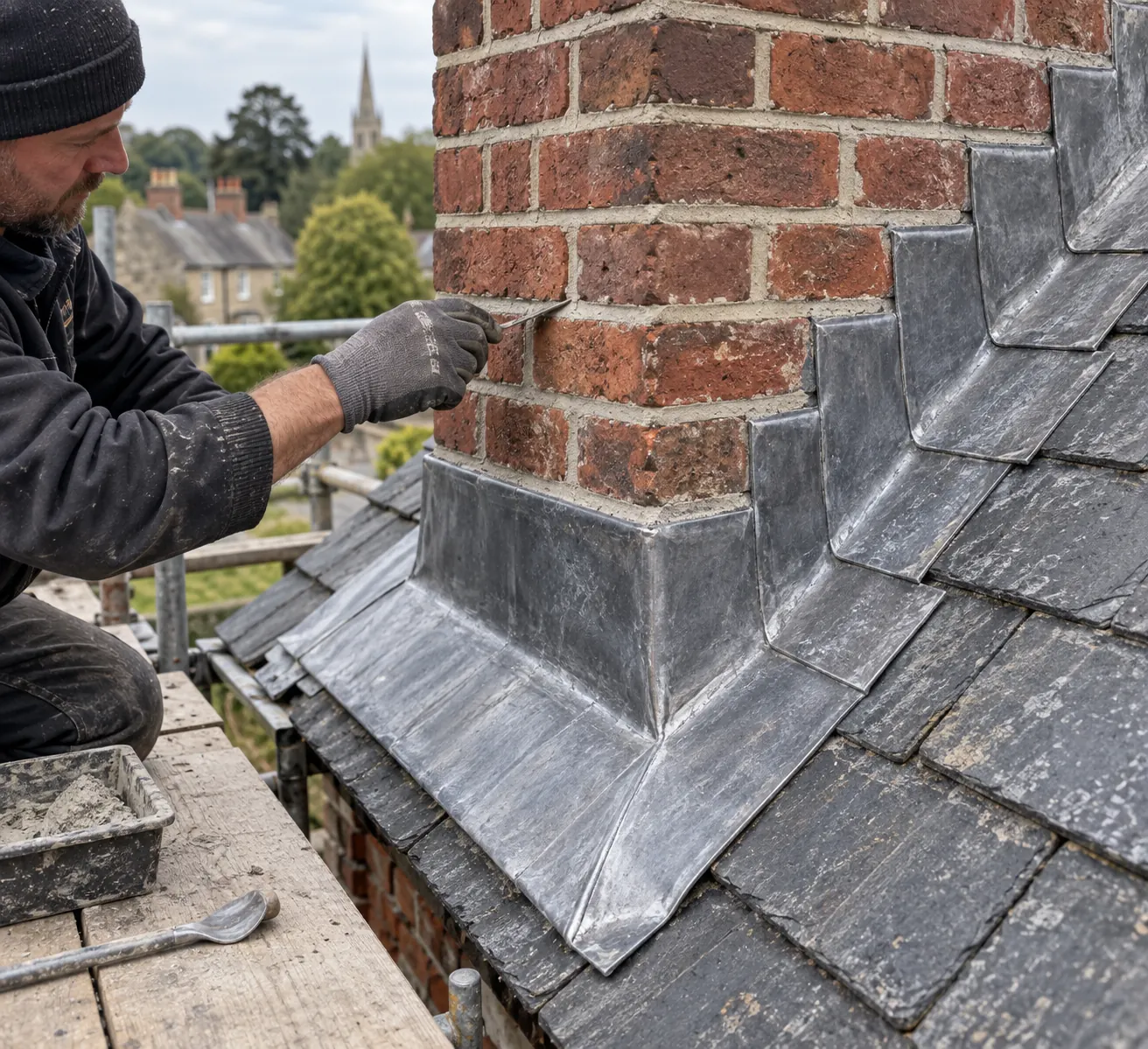
- We fit and seal flashings where the roof meets a wall, so water can't sneak in.
- We clear up and leave the site tidy.
Building regulations can apply when a flat roof is replaced, especially around insulation. We'll tell you what applies to your job before we start.
Common questions
Flat Roofing questions
How long does a flat roof last?
It depends on the material and how well it's fitted. A good rubber or fibreglass roof can last 25 years or more. Basic felt roofs often last less. We'll explain what to expect from each option.
Can you fix a leak without replacing the whole roof?
Often, yes. Once we find where the water is getting in, a local repair can be enough. If the roof is worn out all over, we'll tell you that too.
How long does a flat roof job take?
A small garage roof can take a day or two. A larger extension can take a few days. Weather matters, because the surface has to be dry when we lay the new covering.
Can you work on a flat roof in the rain?
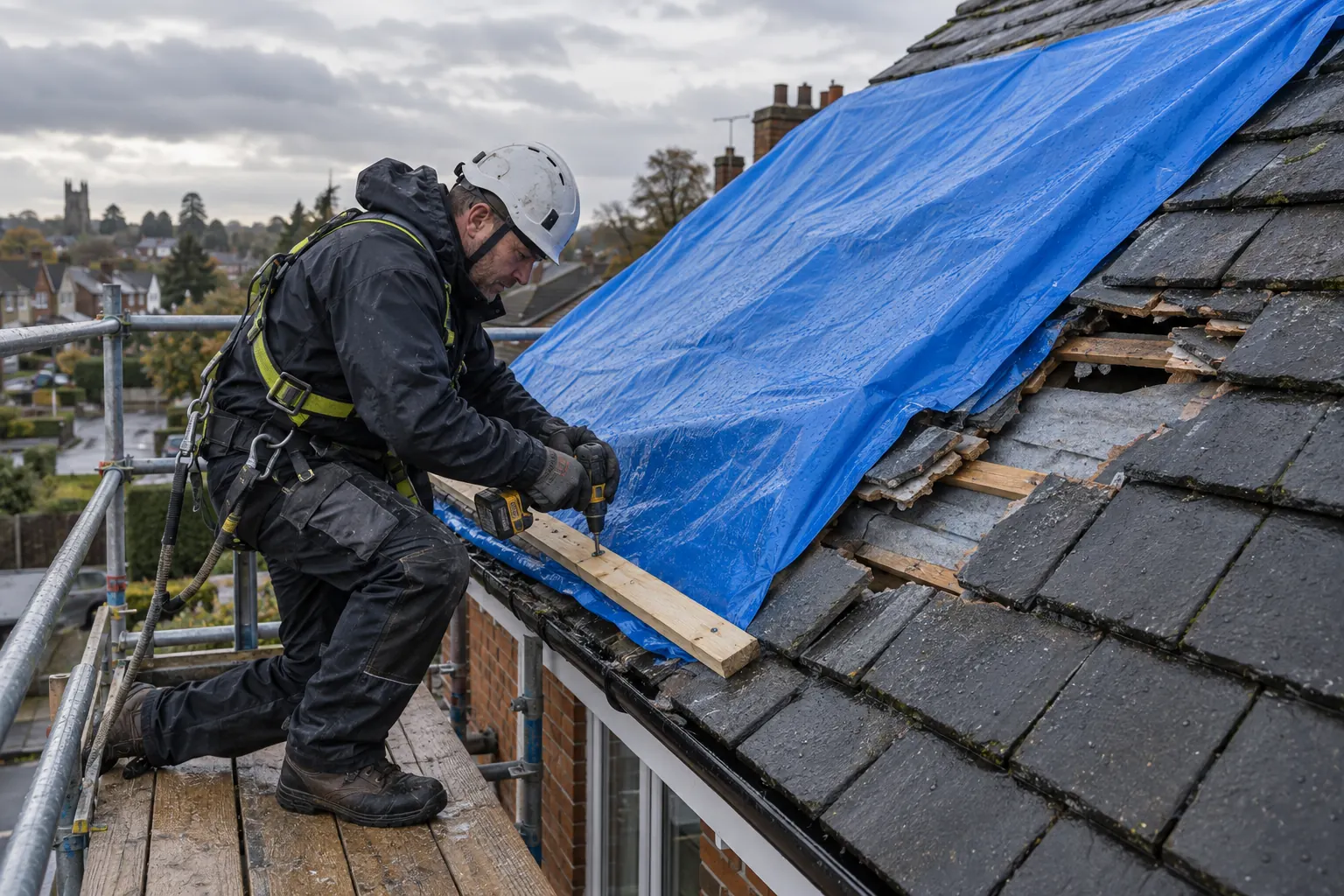
Not on the covering itself. Water trapped under a new roof causes problems later, so we wait for dry conditions. If your roof is leaking right now, we can make it safe first.
You may also need
Related roofing services
Tell us about your roof
Request a quote
Describe what you have noticed and we’ll contact you to discuss the next step.